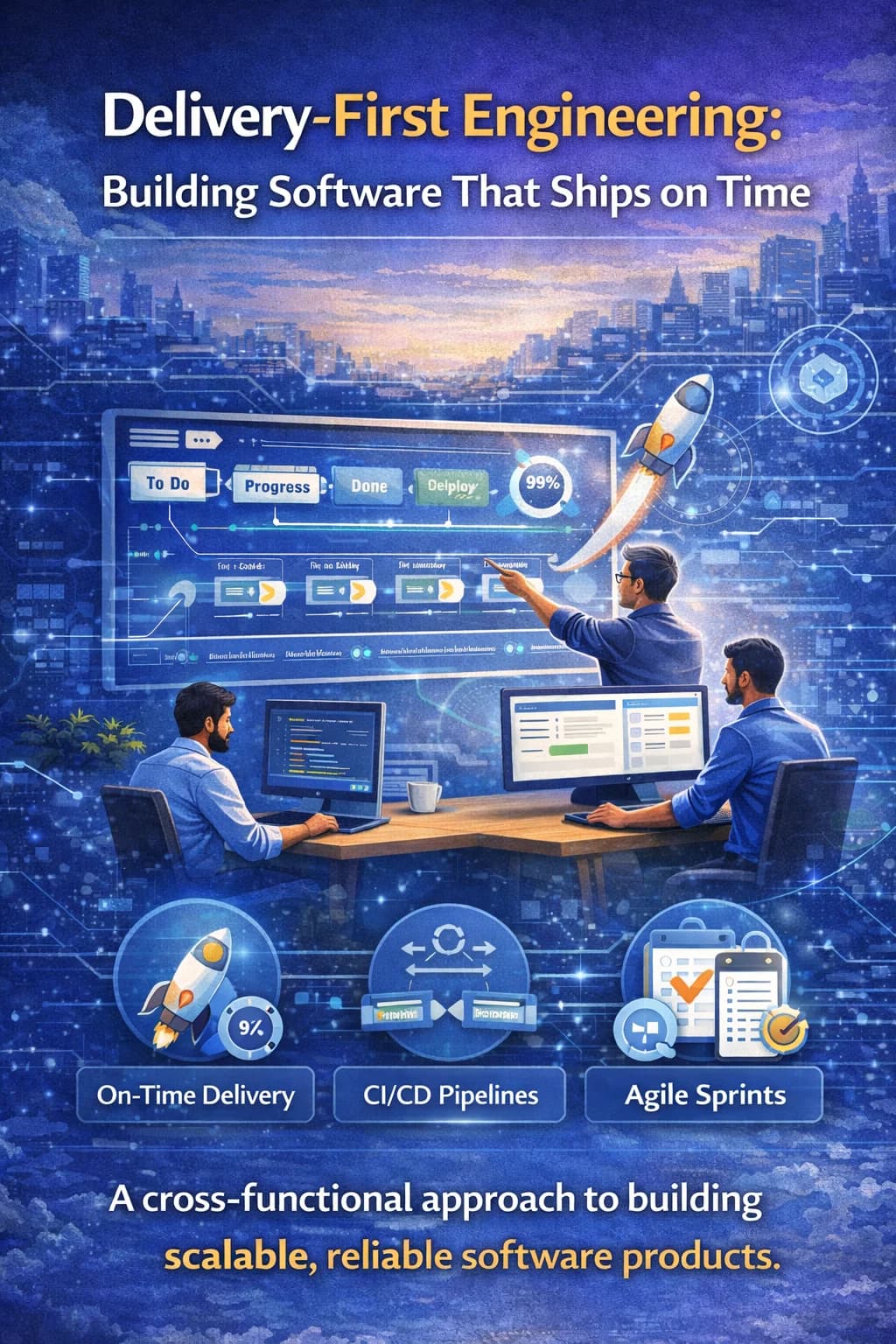
Why projects slip (and how delivery-first teams prevent it)Most delays come from hidden work:
unclear requirements and shifting scopelate discovery of technical constraintsintegration surprises near the deadlinemanual testing and manual deploymentsDelivery-first teams reduce these risks by building feedback loops into every sprint.Core principles
- Ship in small incrementsSmaller changes are easier to test, review, and deploy. This reduces the probability of late surprises.
- Make work visibleBreak features into vertical slices (UI + API + data) so progress is real progress.
- Automate qualityAutomated tests and CI checks are not "extra"—they are part of delivering on time.
- Design for changeUse clear module boundaries and stable contracts so changes do not ripple unpredictably.A delivery-first operating model for startups and SMEsHere is a practical approach that works well for small teams:Define a weekly delivery target (a demoable outcome)Use trunk-based development or short-lived branchesEnforce code review + automated checks before mergeDeploy frequently (daily or multiple times per week)Reliability is a delivery featureIf you ship on time but break production, the business still pays the cost.Delivery-first teams include:monitoring and alertingerror budgets or reliability targetspost-incident learning (no blame)Metrics to trackLead time (commit to production)Change failure rateMean time to recovery (MTTR)Deployment frequencyFAQsHow do we start if our releases are currently painful?Start by automating deployments and creating a repeatable release checklist. Then reduce batch size.Can delivery-first work with fixed deadlines?Yes—it's especially useful. Small increments and early integration reduce deadline risk.Does it require a specific tech stack?No. The mindset is stack-agnostic. The key is automation, visibility, and modular design.Next stepsIf you want predictable delivery, focus on small increments and strong delivery foundations. You can also read about architecture foundations in Production Next.js Architecture for Real Products.